TDLI Invites Global Talents for Shanghai Jiao Tong University (SJTU) International Young Shanghai Jiao Tong University (SJTU) International Young
About the Forum
Shanghai Jiao Tong University (SJTU) International Young Scholars Forum in Physics is jointly sponsored by Tsung-Dao Lee Institute (TDLI) and School of Physics and Astronomy (SPA). It aims to build a platform for academic exchanges for young scholars to attract outstanding young talents to join and boost the development of TDLI and SPA. Outstanding young scholars worldwide are cordially invited to participate.
Form and Time
Forum Date:
Late December 2025 (Specific schedule and agenda will be announced separately)
Participation Format:
Hybrid (both online and offline)
1. On-site Exchange: The Institute may invite selected young scholars to return to China by the end of November for in-depth academic discussions.
2. Online Presentations: During the forum, academic presentations and real-time interactions will be conducted via the Tencent Meeting platform.
Research Fields
Exotic quantum states and materials, Non-Abelian statistics, Unconventional superconductivity and quantum (micro/nano) devices
Qualification
1. Generally not more than 40 years old.
2. With a PhD degree and at least three years of work experience, and the required working years may be reduced for especially excellent applicants.
3. Have made outstanding research achievements and with great potential, and reached the level of assistant professor in world-class universities.
4. Have the ability to independently conduct academic research, lead courses and supervise graduate students.
Benefits and Welfare
According to relevant policies of Shanghai authority and SJTU, we will provide attractive remuneration package, research start-up funds, the well-decorated transitional talent apartments and relevant housing subsidies, the qualification of supervising PhD student, the enrollment of graduate students, high-quality medical services at many affiliated hospitals of SJTU and advanced hospitals in Pudong New Area, as well as the preferential admission policies and conditions for applicants' children.
How to Apply
Please merge the following materials into a single PDF file and send it to the application email: phy-astro@sjtu.edu.cn. (Email subject: Name - Discipline Area - 2025 Young Scholars Forum --- On-site/Online).
1. A detailed CV;
2. A research statement and future research plan;
3. Full text of three representative papers within the last 5 years.
The organizers will evaluate all applications and send official invitations to selected scholars.
1. On-site Participation Deadline: November 15, 2025 (Applicants for on-site attendance must complete registration by this date to facilitate coordination and arrangements.)
2. General Application Deadline: November 30, 2025
Contact:
Ms. Yang +86-21-68693117
Discipline Instruction
SJTU Physics discipline focuses on international academic frontiers and addresses major national needs.
It primarily leverages Tsung-Dao Lee Institute (TDLI) and School of Physics and Astronomy (SPA) to build strategic advantages, create advanced research platforms, gather high-level faculty, cultivate top-notch innovative talent, and foster a culture of excellence.
The discipline currently has 160+ faculty members in total, including nearly 100 high-level national talents such as academicians of the Chinese Academy of Sciences and Engineering, Chang Jiang Scholars, and National Science Fund for Distinguished Young Scholars recipients.
It was selected as a National First-Class Undergraduate Program in 2019 and included in the national "Double First-Class" initiative in 2022. In the 2025 U.S. News global subject rankings, it ranked 21st worldwide.
About TDLI
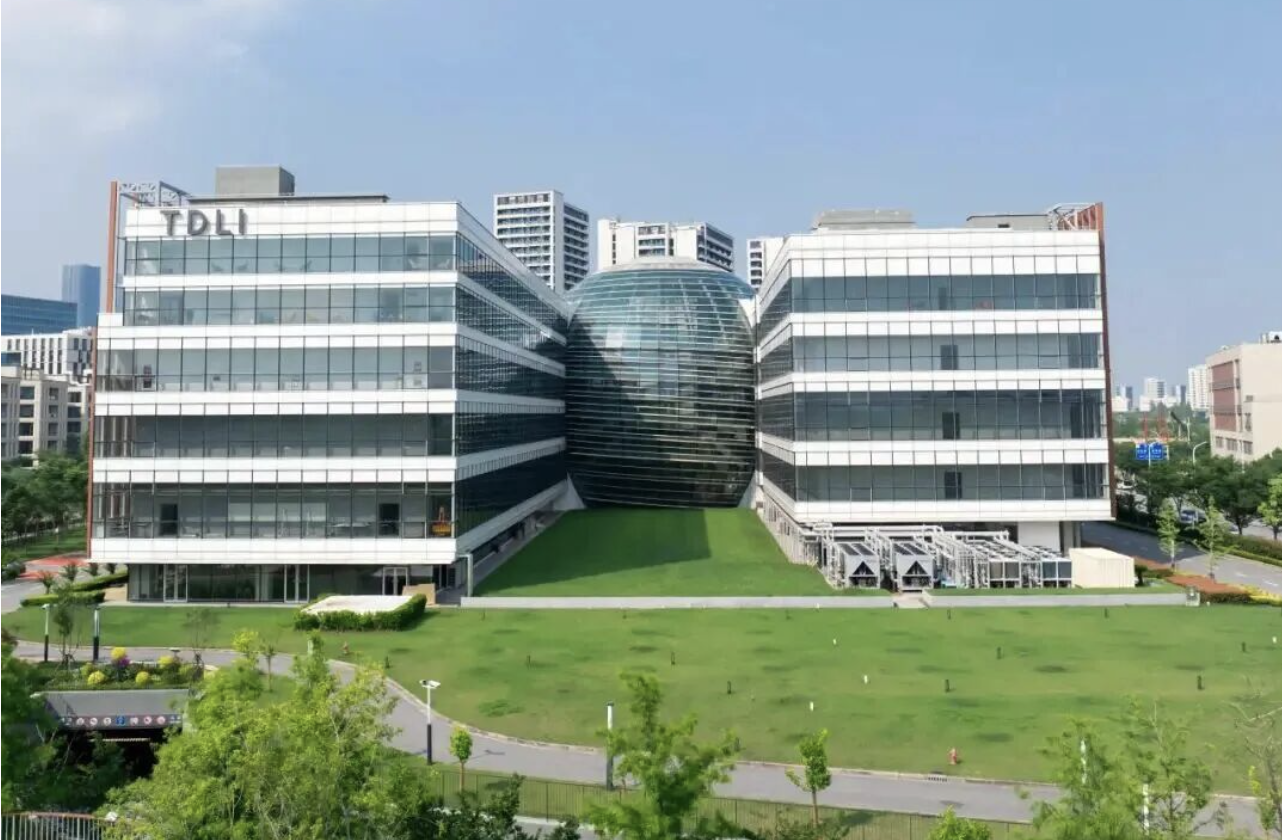
Proposed by the Nobel laureate Tsung-Dao Lee and with support and endorsement from governments and ministries at national and municipal levels, Tsung-Dao Lee Institute (TDLI) is a basic research institute established at Shanghai Jiao Tong University in November 2016, aiming to build itself as a world-leading science institute.
Resonating with Professor Lee’s vision, the Institute focuses on the most fundamental science questions and conducts cutting-edge research in physics and astronomy in an effort to shed light on the relationship between the maximum and the minimum in the universe, and the most fundamental and profound laws of interaction in the nature.Focusing on the fundamental scientific issue of "the origin and evolution of matter", the Institute has formed three major research directions, namely, astronomy and astrophysics, particle and nuclear physics, and condensed matter physics, and focuses on the construction of the Laboratory Astrophysics Experimental Platform, Topological Materials Experimental Platform, and other comprehensive and open-type basic research facilities. In 2022, we launched the construction of three forward observation bases, including the Dark Matter Phase II detector at a depth of 2,400 meters in Jinping, Sichuan Province, the JUST Telescope in Cold Lake, Qinghai Province, and the Deep-Sea Neutrino Telescope in Hainan Province, and plan to carry out all-around in-depth research on fundamental scientific issues from the dimensions of passive, active, and emergency. Using natural extreme environments, artificially created extreme conditions, and the use of extreme detection means to explore and regulate extreme novelties and carry out organized scientific research. In 2023, with the advance efforts, TDLI was selected as one of the first batch of the Ministry of Education's Mathematics, Physics, Chemistry, and Biology National High-Level Talent Cultivation Centers.
Looking forward, we envision fostering a supportive, inclusive culture of 桃(táo)李(lǐ)荫(yīn)翳(yì)家(jiā)安(ān)其(qí)所(suǒ) (A verse from classical Chinese poetry describes a harbour where the talented are cultivated and empowered to happily explore their full potential, and people from the outside admire and wish to join.)
About SPA
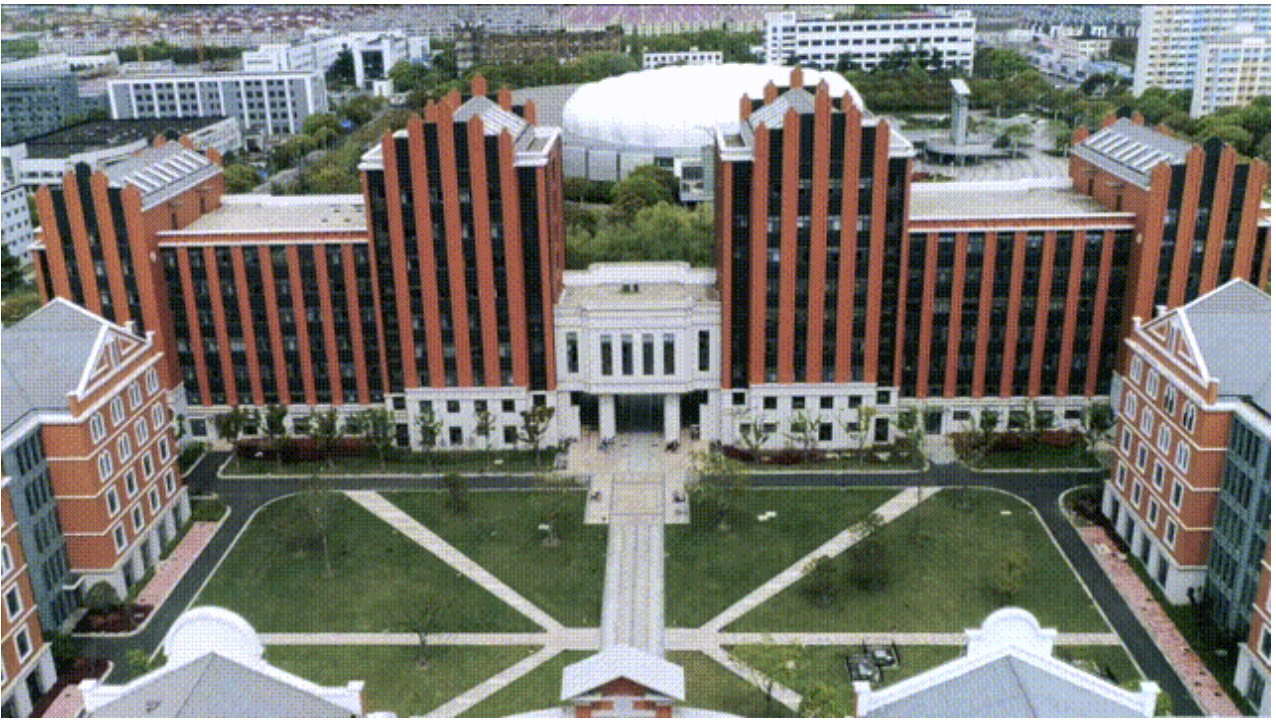
The Department of Physics of Shanghai Jiao Tong University (SJTU) was established in 1928. It was one of the earliest physics departments in China. It covers a broad range of research areas in the field of physics and astronomy, including particle and nuclear physics, condensed matter physics, optics, atomic and molecular physics, laser plasma physics, astronomy and astrophysics, computational physics, and interdisciplinary physics.
SPA leads one National Key Laboratory, one National Collaborative Innovation Center, and one National Innovative Research Team, one National Experimental Teaching
Demonstration Center, one National Engineering Physics Teaching Base, one National Center for High-Level Physics Talent Training, four Provincial and Ministerial Key laboratories, three National Natural Science Foundation of China (NSFC) Innovative Research Groups, three Ministry of Science and Technology Innovation Teams, and three Ministry of Education Innovation Teams. SPA is located in the Science Building of Minhang Campus of Shanghai Jiao Tong University, covering an area of more than 42,000 square meters, with a conducive working conditions and environment.
SPA has attached great importance to talent cultivation and has made great efforts to explore the cultivation mode of outstanding physics and astronomy talents. There are currently more than 1,000 students in SPA, and in the past five years, students have won more than 100 awards in competitions at or above the provincial and ministerial level. So far, SPA has cultivated more than 4,500 outstanding graduates and have made important contributions to social development and scientific and technological progress.